How Can ERP System Improve Local Government Operations?
Managing a government operation without ERP tools is like preparing for a race in concrete shoes: agonizingly slow, frustrating, and a guaranteed route to burnout. If dealing with ancient systems that provide more of a maze than a solution has left you feeling exasperated, it’s time to think about State and Local Government enterprise resource planning software. These systems are more than just a chest-thumping label in the corporate technology world; they are the resource harness that facilitates streamlining processes, resource management, and the disposal of rampant operational inefficiency. The best ERP system is your key to making the switch.
What is ERP Software?
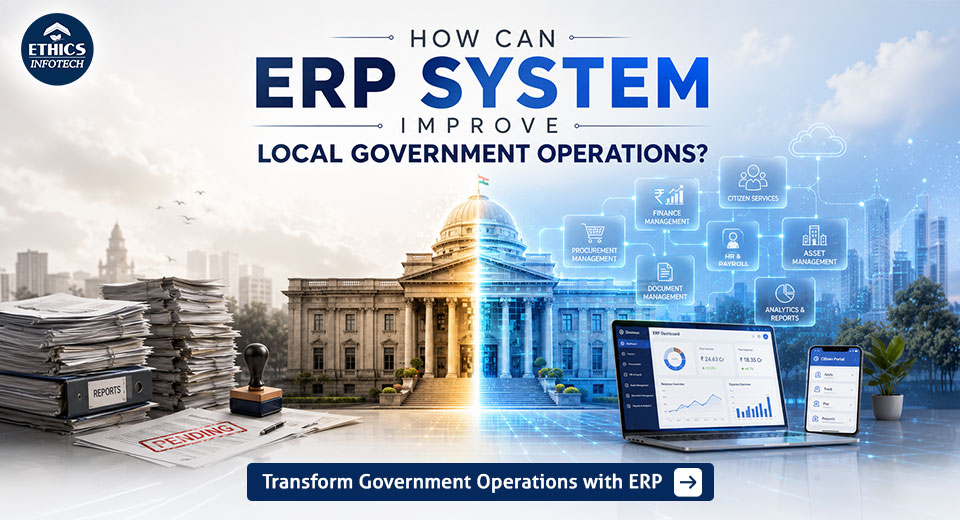
Enterprise Resource Planning (ERP) software incorporates numerous organizational functions into one comprehensive system for better resource planning and management within an organization. In the case of subnational government units, this also covers budgeting, finance, procurement, HR management, and even complete asset management.
ERP systems have enabled local governmental units to integrate data, automate business processes, and improve information and knowledge management. This ensures that several government departments improve their productivity while meeting the required fiscal discipline.
The best ERP system for state and local government agencies is one that offers customization options to facilitate the unique requirements of public administration, along with transparent and accountable operations insights. When properly executed, ERP implementation can streamline numerous processes and improve service delivery to citizens.
Key Benefits of ERP Systems in Government Operations
1. Improved Efficiency
Perhaps the most difficult problem in managing government operations is the overlapping and inefficient manual activities. Automation of many tasks through ERP tools can reduce the level of human engagement required in repetitive work processes in government and local authorities. Departments and divisions have the ability to obtain useful information with greater speed through various interfaces, making it possible to eliminate lags in the performance of operations. This leads to an acceleration of public services response time and a positive impact on the efficiency of work processes in general.
2. Better Resource Management
Management of assets, vehicles, and human resources is important to state and local governments. These resources can be monitored and managed through a single system with appropriate ERP software. For example, governments can track vehicles used for public transport, manage inventory in public stores, and account for workers in various departments. This degree of control guarantees that no resources are squandered, which lowers operating costs and improves the delivery of public services.
3. Enhanced Budgeting and Financial Management
Public sector organizations often operate on budgets that must be allocated strategically within the organization's set goals. Enterprise Resource Planning systems provide regional and local governments with tools to manage their finances, supervise spending, and formulate financial strategies for the future efficiently. Financial automation as well as increased transparency enable governments to ensure citizens’ funds are utilized in a discretionary manner, and services contracted by taxpayers are delivered at an adequate level.
4. Transparency and Accountability
It remains exceptionally challenging to maintain full transparency in every operation that takes place in public administration. Using enterprise resource planning systems, governments are able to provide live views of their financial documents, procurement operations, and even human resources activities. Interested parties, including citizens, are able to track and evaluate the expenditures of public funds,nds which in turn guarantees that the government is transparent and accountable for its actions. This fosters confidence and ensures that the government’s undertakings align with the expectations of the public.
5. Data-Driven Decision Making
Previously, state and local governments would operate on outdated and incomplete information. However, with the development of ERP systems, real-time data is more accessible than ever to guide governmental decisions. This data, in particular, can be harnessed to enhance operational efficiencies, service provision, and predictive analytics for future requirements. In accounting or public service provision, the precision and punctuality of information are paramount.
6. Enhanced Collaboration Between Departments
Different government departments need to work together if they are to perform their operations efficiently. Enterprise resource planning software enables departments to interact and communicate better because it removes barriers between them. Sharing health information, managing public health data, tracking project achievements, and even sharing financial information are made easier through ERP software so that departments can work in closer collaboration with one another. Improved integration of departmental functions within public sector institutions because these departments work towards achieving a common organizational focus, resulting in enhanced operational efficiency and improved management of public services.
How ERP Implementation Helps State and Local Governments?
As with any other process, ERP implementation requires appropriate planning and precision. For local and state governments, this means choosing the correct ERP software with configured modules that support operations and employee training, relevant to their exact requirements. The system gives the impression of being complex initially, but with adequate assistance, it can bring notable optimizations in the operational efficiencies of the government.
Here are some key steps for successful ERP implementation:
1. Assess Your Needs
Prior to engaging with ERP software, it is important for governmental structures to evaluate their requirements. Which aspects of your operations require enhancements? Are you interested in advanced resource and financial management, or in better reporting of activities? Knowing these needs will assist you in selecting the best ERP system.
2. Customize the System
Like any industry, government organizations have specific needs different from one another. Modifying the ERP system to fit these requirements is critical for a successful implementation. Be it customizing financial modules or modifying reporting capabilities, the ERP system should adequately address the needs of your government operations.
3. Train Employees
To purposely reap the benefits of an ERP system, from its automation capabilities to data analytics, the organization’s staff must be trained on how to operate it effectively. ERP implementation requires teaching personnel from different divisions as cross-functional teams, so they can better leverage the system's functionalities. Properly trained employees can enhance their productivity, and your government operations will be simplified.
4. Monitor and Improve
Are the ERP tools performing according to what was expected? Is there some way you can improve further on efficiency or expand on what has already been streamlined? Consistent monitoring coupled with unceasing modifications will aid your institution in getting maximum value from the ERP system.
Choosing the Right ERP System for Government Operations
When selecting an ERP (Enterprise Resource Planning) system for your governmental activities, it is critical to analyze aspects such as the level of customization, ease of navigation, and user support. Unlike private organizations, state and local governments operate under unique complexities when it comes to public administration. The best ERP system for such organizations is one that is not only tailored to specific requirements, but is also dynamic enough to change with emerging trends in public administration.
Conclusion
To sum up, State and Local Government ERP Software simplifies the operation of public sector organizations. These ERP systems assist governments in serving their citizens better by optimizing processes, enhancing effectiveness, and offering transparency. The correct ERP system can change resource management and ERP implementation for state and local governments and deliver responsive, cost-effective, and efficient public services. For public sector agencies seeking operational efficiency, the ideal ERP system has become a necessity, not a luxury.
With the adoption of ERP systems, public administrators can construct a more citizen-friendly, efficient, and accountable government while simultaneously streamlining the management of public assets. Request a Free ERP Consultation!